And his newest collection, Veni Vidi Venti
By Jack Boulware
June 9th, 2026
Ian Shoales is a social commentator, performer, lyricist, writer, humorist, and imaginary human being organized and manifested by Merle Kessler. He was a founding member of the legendary comedy troupe Duck’s Breath Mystery Theatre, a columnist for Salon.com, a frequent contributor to NPR’s All Things Considered, and even an occasional talking head on Nightline with Ted Koppel. He is one of the few writers with two MFAs from the famous Iowa’s Writers Workshop to be published by Henry Rollins. The Washington Post has called him “Motor-mouth master of the audio sneer.”
His newest release from PM Press, Veni Vidi Venti (available July 14), gathers up a new goulash of writings, from TV scripts and song lyrics to social media posts, haikus, lists of leftover projects (“Enough with the dolphins!”; “Empire of Straw Men: The Lost Boyfriends of Taylor Swift”), and essays from his long-standing gig on the syndicated Philosophy Talk radio program, where he currently performs weekly as the “Sixty-Second Philosopher.”
(For whom it might matter: “Veni Vidi Venti” is a mutation of “Veni, vidi, vici,” attributed to Julius Caesar, which translates from Latin as “I came, I saw, I conquered.” Substitution of the word Venti would then technically mean, “I came, I saw, I ordered a large coffee from Starbucks.”)
We did this interview at his house in Oakland, CA. I expected the many shelves crammed with books and ephemera, and even the creepy puppet lookalike which appears on the cover. But I was not prepared for the teeth-grinding fury of his turbo-strength “Death Wish” espresso.
What Jack Boulware Fails to Realize is a reader-supported publication. “‘You’re mocking the foundations of science.’ Well, yeah. That’s comedy, isn’t it?” To receive new posts and support my work, consider becoming a free or paid subscriber.
Veni Vidi Venti comes out in July from PM Press, and unlike your other books it actually contains a new interview of you, Merle Kessler, by your editor, Nick Mamatas.
Which he pretended, like, this is just the piece that somehow got written about Merle Kessler that I, the editor, I guess, wrote.
And PM Press approached you for this, as part of their Outspoken Authors series.
Yeah. I liked what the other people did. Paul Krassner had one with them. And Ursula Le Guin. It’s kind of a cool deal.
And you asked Mamatas if it could be a chapbook?
That’s how I described it. He said, okay. We won’t call it that.
So it has the structure of some of your other books. In that it’s kind of a potpourri of different types of pieces.
What should I do? It’s like, do I put all of my Ian Shoales bits in there? Like, oh, fuck. We’ve done that. Even I was like, I don’t wanna read a book of that, you know!
But it is the perfect format. One of the great advantages of those short-form bits, is that as a reader you can just bounce around and read it out of order. I love the bizarre song lyrics about the Abe Lincoln robot that leaves its amusement park, and goes off and starts a family.
[laughter]
Adopted them. Well, he doesn’t have a dick, I don’t think.
And the piece about the Bed & Breakfast culture, where so many of these B&B’s are specifically tailored for women and so you invent one that’s exclusive only to men. That’s so true it’s painful.
I actually went to one with, you know, potpourri and pillows—who is this for?
It’s not for men.
It’s for a dream vacation for an NPR personality.
And also, they always encourage you in the B&Bs: “Oh, you should socialize with people at breakfast!”
I know! I don’t want to meet this foxy grandpa across the way there.
My first memory of you was a launch party for your first book I Gotta Go, around 1986, at this thing called the Loonies, which was a group of San Francisco cartoonists that would meet every month in a pizza parlor down on 19th Avenue.
Yeah. That’s where I first met you. And you asked me if I wanted to write for the U.S. Rag Magazine.
Which I don’t even know if I’d started yet.
That’s when our lucrative relationship first began.
We’ve made a ton of money together.
[laughter]
I Gotta Go was a compilation of pieces that were all from Ian Shoales’ perspective. And the Shoales character came out of the Duck’s Breath Mystery Theatre comedy sketches.
Originally it was supposed to be a guy you might know, I can’t remember his name now.
You told me once, it was [S.F. Chronicle music critic] Michael Snyder.
Michael Snyder. Yeah. Him, and also the roster of Rolling Stone magazine. And Esquire too. Kinda like the guy now who’s the fraud? Doing all the Trump stuff? He just wrote a book about Trump, and now he’s become, like, “I know Trump better than any man!”
Michael Wolff.
Michael Wolff. Yeah.
So you were looking at all these people and thinking, oh my god, somebody needs to make fun of this?
Well, yeah. I wanted to make fun of this whole thing, but then also, do it too. Let’s have your cake and eat it too. That’s what these guys do.
Right. So it was first and foremost a performance character.
Yeah. Richard Belzer was another guy. Who is that guy, but he’s also not that guy.
So you would go to the Duck’s Breath members and say, I have this idea? Or I’m just gonna do it, and everyone would go, okay?
Well, no. This was all radio stuff. Leon [Martel] and Jim [Turner] did not give a fuck about radio. They were all about the stage. They didn’t care about radio one bit, which is kinda weird. You can just do it for nothing. And actually, there is sometimes money in it.
So it was originally radio.
Before that, I had another character called Mel Egypt. That was the same kind of deal, only he was an idiot movie critic. He got on All Things Considered a couple of times. The whole thing was that he didn’t know anything. He was like, let’s go to the movies! And he was really enthusiastic.
And empty-headed?
Oh, just totally empty headed. It was too empty-headed. It was hard to write because he was so stupid.
So the Ducks were doing radio before you were doing stage stuff?
Dan [Coffey] and I always wanted to get into radio because Dan was a radio-head and I was always like, yeah, I love radio! Firesign Theater, and Bob and Ray. Jack Benny and all that shit.
The Ducks started in Iowa, and did all of you go to the university there?
Yeah. We were all in graduate school except for Turner. He was an undergraduate. I was working at a place called the Boulevard Room, which was a black bar, pretty much. I was a janitor.
And this was while you were still in school?
I was wrapped, but I was thinking, what am I gonna do next? I was there for the summer. I had a little job. It paid the rent. But anyway, Dan Coffey would do his plays in the student union. And I said, why don’t we do something in the Boulevard Room?
Ethel Madison ran the joint. She was a very cool gal. She was married to a mathematics professor. She was a bored faculty wife, basically. So she started this bar. Every night was something different. She had a gay night. We had drag shows. Then she had a country-western night. And she had a blues night. A really great blues band.
So you guys started performing there?
That was our first gig, at the Boulevard Room. We did the “Cliff Notes Hamlet.”
Was it already the entire group?
Yes it was. That was a big success, so let’s do another one. We couldn’t do it there. So we went to another bar. He gave us Sunday night or something like that. And we just started a comedy group. It was Dan and Leon and Bill [Allard] and me and Jim and then another guy who left and didn’t want to do it anymore. I think because he didn’t know it was going to be a thing.
Wow. Humble beginnings.
We spent the summer doing this. Well, let’s just keep doing it. So we did.
You were successful in Iowa, but then you moved to San Francisco.
Right. Turner had been here. We said we wanna go somewhere. Our choices were, in our minds, Minneapolis, which probably would have been better for us if we’d done that. It’s a friendlier town. Plus, we all had kind of a Midwestern vibe to us.
And Minneapolis has a very strong sense of public radio.
Oh, and also it has a big theater community. They got the Guthrie, and Dudley Riggs’ Brave New Workshop, which has been there forever.
So you didn’t go to Minneapolis.
So no. The other guy that was in the Ducks said, we should go to Pittsburgh. Because he got a job in Pittsburgh. We were talking about L.A. too. And then we were like, nah. That’s the place to go when you got something. You don’t go there to develop things.
I hear you. So Turner basically convinced you to move to S.F.
Yeah. Because in any situation, he’ll wind up being the leader, whether you like it or not.
He seems to have become the kingpin of a certain Los Angeles comedy scene. Performing in film and TV and onstage, throwing movie screenings and political fundraisers in his backyard.
I know! He’s become like this Democratic party functionary. It’s kinda interesting. I never would have thought that.
So you guys decided to come to San Francisco, and the Ducks manager Steve Baker once told me this. Let me know if this is correct. All of you move into a mansion in Seacliff?
Eventually, yes. We lived there for a couple years.
So that’s true? The toniest, ritziest, most exclusive neighborhood in San Francisco, and a bunch of guys from Iowa…
We were just kitty-corner from Grace Slick, I believe. And after that, we just said, “Why are we all living together? I mean, we’re all grown men. We don’t need to live in a house like we’re the Monkees.”
[laughter]
So the year you came out, it was what?
We got here in ‘76.
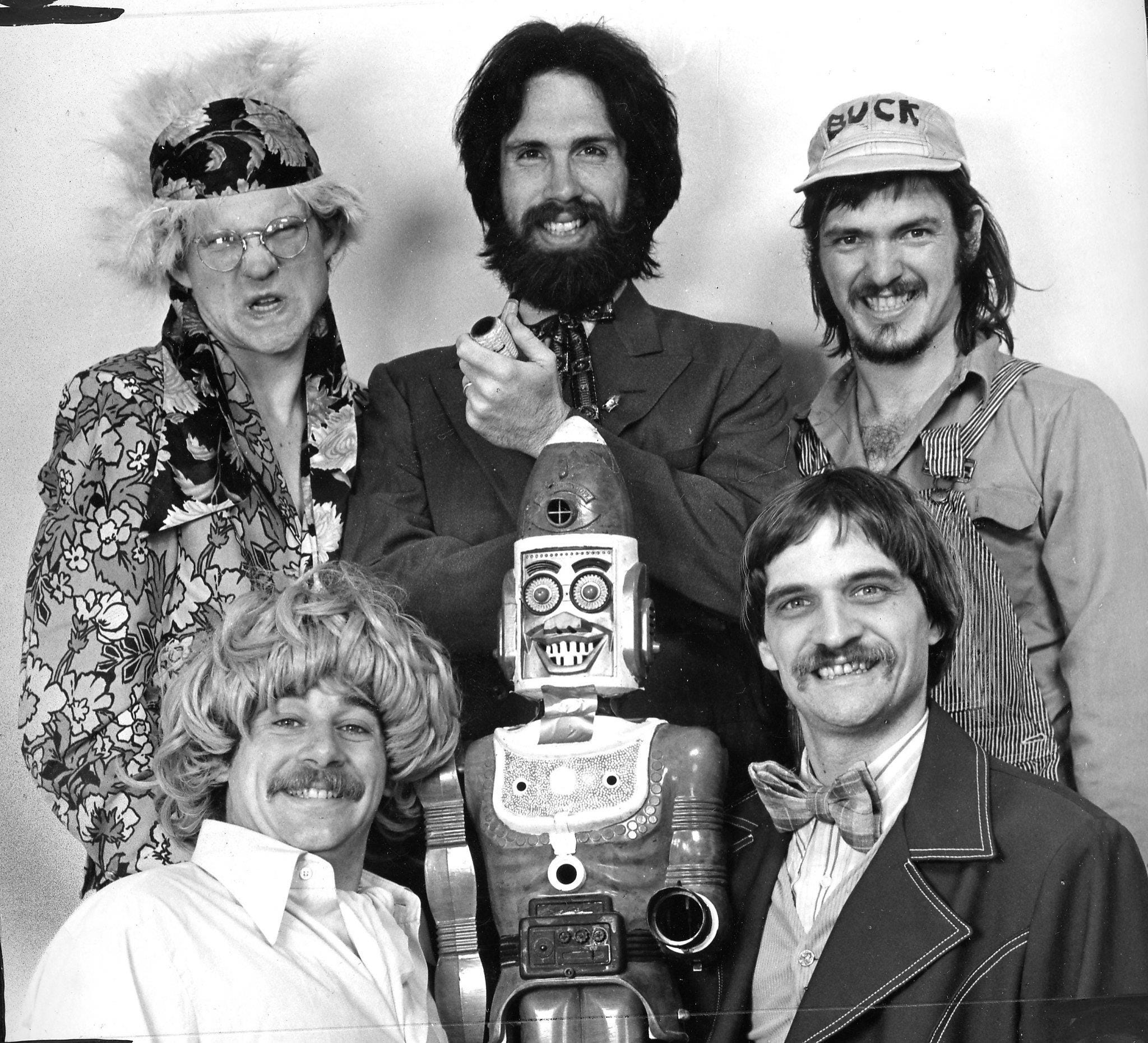
Ducks Breath Mystery Theater, 1977.
People told me that in the seventies, the Ducks Breath shows were the show if you smoked pot. The coolest possible absurdist comedy experience.
Maybe. I guess. I don’t know. There wasn’t that much pot smoking. Not like Grateful Dead shows. We did a show once up in Northern California, Humboldt County. And there were joints on all the tables. And we went to the dressing room, and there’s some buds for us.
As soon as I got here in ‘83, I was in little improv shows and I started hearing about the Ducks. Oh my god, the Ducks did this, the Ducks are doing that. Did you hear, Jim Turner did this? I heard about Jim Turner first.
Well, Jim Turner, he’s the genius, he really is. He’s really funny in ways I don’t understand.
[laughter]
Before we met at the Loonies cartoonist gathering, I remember seeing your face on Nightline with Ted Koppel.
Right. And that came about through Ian Shoales.
A stage show, or the radio?
The radio. All from radio.
And someone said, let’s put him on camera.
Yeah. To be a commentator. And matter of fact, they asked me, why don’t you come in and be on the panel? And I said, “I’m a fictitious character,” you know? “Ted Koppel! Let me explain something to you!”
Yes, right, cut him off: “That’s where you’re wrong, Ted.”
I just thought, well, that could be too weird. “Hi, I’m Mark Twain,” or something like that.
My memory of Nightline is that they would cut away to you, and then you would do your commentary piece. And they would cut back to someone at the desk, after your bit, and they would always give that expression of, “Well. That was an unusual take.”
Well, yeah. And I was also on, in the middle of the night on ABC, for a couple years. And they paid me $100 for each piece. I just recorded them all in my living room.
Wow. Did you mail the tape? We’re talking in the era when you’d have to mail the tape.
Yeah, they would get it all, and cut it together. First, I recorded them at ABC, and then I said, oh, let’s just get a camera and do it in my living room.
For a hundred bucks.
For a hundred bucks! ABC would pay for the equipment. I would do four or five at a whack and bang them out. They even sprung for a teleprompter. So that was kinda cool. But it was still cheap-ass. After awhile, they would be like, “Oh, you’re on too much.”
Overexposure?
Well, there’s also questions of propriety. NPR is like, “I should share that recipe with you.” More than, like, “Get that fuckin’ cake out of my face.”
Was Ian Shoales ever censored or taken off the air?
No. But Doctor Science got knocked off the air in Texas. Scientists at the University of Austin got pissed off that we were making fun of science. “You’re mocking the foundations of science.” Well, yeah. That’s comedy, isn’t it?
Ian Shoales is an anagram for “I, an Asshole.” Where did you get the idea to deliver it so fast?
Well, that was the original thing. I can talk pretty fast. And the idea is like, I gotta get this done quick because there’s people trying to stop it. I’m not too sure I have permission to be doing this. You know?
But it allows you to cover a lot of ground too, and make left turns and right turns. And it’s kind of like a firehose in a way.
Well, yeah. I finally figured out how to do that in prose form too, doing it for Philosophy Talk. It slowed down a little bit. But, also, you do things like, talk really fast, talk really fast, and then talk slow, and bring back something you said, like, three minutes ago. And everyone would go, “Ooh, ahh!”
He did that thing!
Exactly.
So if it was on radio first, what changed when you started performing Ian Shoales live onstage?
Well, I started making up a backstory.
So it wasn’t just a guy talking?
I’m not just talking. So it’s like, this is my life. This is what I do.
So it enriched the character.
It just widened the base for jokes.
I remember seeing the Ducks in the eighties, Great American Music Hall. I was in the very back row of the balcony. It was that packed. That was the first time I saw the Ducks. And it was crazy chaos. I remember Dr. Science, you and Dan, because visually it was little Rodney the assistant, and then this giant blowhard doctor with a lab coat. And then, of course, Jim Turner as the burned-out hippie character Randee of the Redwoods. But when Ian Shoales appeared, it would be this guy that enters, stands at a mike and talks extremely fast, going off on some subject, dripping with sarcasm, then says, “I gotta go,” and then quickly walks offstage. I’d never seen anything like that before. He had a fedora. He wore a sportcoat of some kind.
I always wore a suit and a loosened tie. Trying to look like a thirties newspaperman, was sort of the idea.
So from reading all your stuff over the years, we do learn a bit about Ian Shoales, the character. He wishes that ATMs would continually play reggae music. There were all these things you’d pick up on, like, good sex is great if it doesn’t last very long.
[laughter]
There was one other thing, about whether Mick Jagger might now be at the point where he’s concerned about wearing comfortable shoes. You would think, this is a well-realized sort of character.
Well, yes. Sort of like LSD whimsy or something, you know.
LSD whimsy!
It’s just Freak Brothers world, really, only with a suit.
Bumper stickers, that was a big one.
Oh, yeah.
There was one show at the Julia Morgan theater. It was three nights of sketch groups, including Culture Clash and the Ducks. I was in a little teeny group one of the nights. And of course, I watched all of them. You did a fabulous rant about dumb bumper stickers.
Right. “I heart my dog head.” First time I saw that [sticker], I went what? Oh, I love my dog? What? So what!
That to me was a classic Shoales riff on human stupidity. The follow-the-herd kind of mentality.
Well, it’s also the trouble with liberals, and why everyone hates them. It’s this kind of constant, can’t you just talk like a normal human being? You know? Does there always have to be a fucking slogan to everything?
So as you’re writing these bits for the Ducks, and having your own showcase within the show, did you want to write for Ian Shoales constantly? Or was it just like one of the things you did?
Just a thing. It was almost like writing for a magazine. I got a column, but I also gotta do the story too. Plus the Ducks, we didn’t write that much, really. When we did, it was almost like pulling teeth. Have you ever been in a writing session with other people? Nobody wants to do it! It’s really weird.
I always ended up being the guy with the notepad.
Me too. I was the guy with a pen. I write things down. Dan would never have a pen. Jesus Christ, you know. Why do you think we’re here?
So much of the Ducks was physical and visual comedy. Takes and reactions.
But those are all written. Or we would do it and then write it down.
I remember one Jim Turner moment as Randee of the Redwoods, again at the Julia Morgan. He’s going on about whatever, spaced-out musings, and at one point he suddenly gets fixated on a spot of paint on the stage.
Yeah!
He probably did this a lot. People were going crazy in the crowd. And he would just talk about this speck of paint for probably five minutes.
And freaking himself out. Like, “I don’t know what the fuck that is!”
I asked him backstage, was that improvised? He said, no. Very serious. No, it’s all written.
He’s done improv, but he likes to write it out. He likes to think about what the character is.
You all came from the distinguished creative writing program in Iowa. Now did you know at the time it was funded by the CIA?
What?! It might have been. Because they did Commentary magazine, I think.
Also Paris Review, and some other publications around the world. It was that whole “soft war” of the fifties.
Yeah. It’s like, we’ll show those Commies what our writers can do.
Exactly. And promote democracy. There’s a great book called Finks, that goes into the CIA funding all of these post-war projects. The literary journals in Japan, the tours with American jazz musicians. The writer did a really good job.
[We talk about the book Merle is currently reading, about the rampant use of amphetamines in Nazi Germany.]
So the breakout characters of the Ducks shows become Ian Shoales, and Dr. Science, and Randee of the Redwoods. And was that a sort of a thing where the audience told you that? And then the rest of the guys go, I guess they really like him?
Well, no. Jim just started it as a bit and he kept building out this character, you know, and it just became more and more of a thing.
But was there any sort of tension with the other guys? These characters are getting more well-known than the rest of the group?
Jim and I were like, “I just got this gig, I’m gonna write for Jay Leno for a couple months. Is that okay with you guys?” Turner went on tour with some guitar god for three months. There were resentments. But also, who cares, really? It’s like, you could have done this too if you’d done it.
Are you guys all still friends?
Well, yeah.
How many years did the Ducks last?
Well, we could do something again tomorrow. We didn’t break up or anything. But now, you know, we’re all kind of decrepit.
So enough about the Ducks.
Fuck the Ducks.
What bothers you about Garrison Keillor?
[laughter]
Well, his end was sort of like everything that was wrong with him. He’s just this weird sneaky guy.
In what way?
Well, there was like a bit of controversy. I don’t even know what it was. Like, he felt up a girl at the office or something. And then he just sort of vanished, and that was it.
At one time he was ubiquitous in radio, with the Prairie Home Companion show. He was this harmless Midwestern folksy kind of personality.
But he wasn’t like that at all. He was a sullen, weird guy. I remember Steve tried to talk to him about how the Ducks could maybe be on Prairie Home Companion. And he just didn’t respond.
I never liked that show.
I never did either. Well, I think people living in Minnesota like it because it’s, you know…
Making jokes about small towns and Finger Lakes and all of that.
Yeah…
I would hear it on NPR and just go, man. Being from small-town America I should supposedly like this. But it’s just a little too earnest, or pandering or something.
I never believed it, you know. Because he went to St. John’s, I think. He was not evangelical, but some weird Christian sect. I know in his book, he did a bit on Lutherans…Martin Luther had to take this testament that he hammered onto the wall of the Catholic church. And he had a parody of that in his book, which makes me think, he believes all this stuff. There’s something off about him, I always thought.
When I was much younger, people would say, oh, you seem to be interested in humor and writing. I’m gonna give you a book by Garrison Keillor.
Ha ha!
I remember looking through it, and realizing this is definitely not for me.
He also used to be on the radio every morning.
That’s right!
“Martin Luther King was born on this day.” And he’d read these poems in his walrus voice or whatever.
I got the feeling that this must play to people in urban areas who don’t even know what Minnesota is like, or any of that world. It’s like a message from space for them.
Well, it’s also like, coming from that milieu, it’s like, what are you glorifying here? I’m not understanding you.
You mentioned that some kids write you letters when they read your novel. Do you get letters like, thank god, I feel the same way, I’m not alone, kind of thing?
It was kind of that. But I haven’t gotten one of those in forty years!
So Ian Shoales fans are not the type to go, good job, Ian. Kudos!
Kudos!
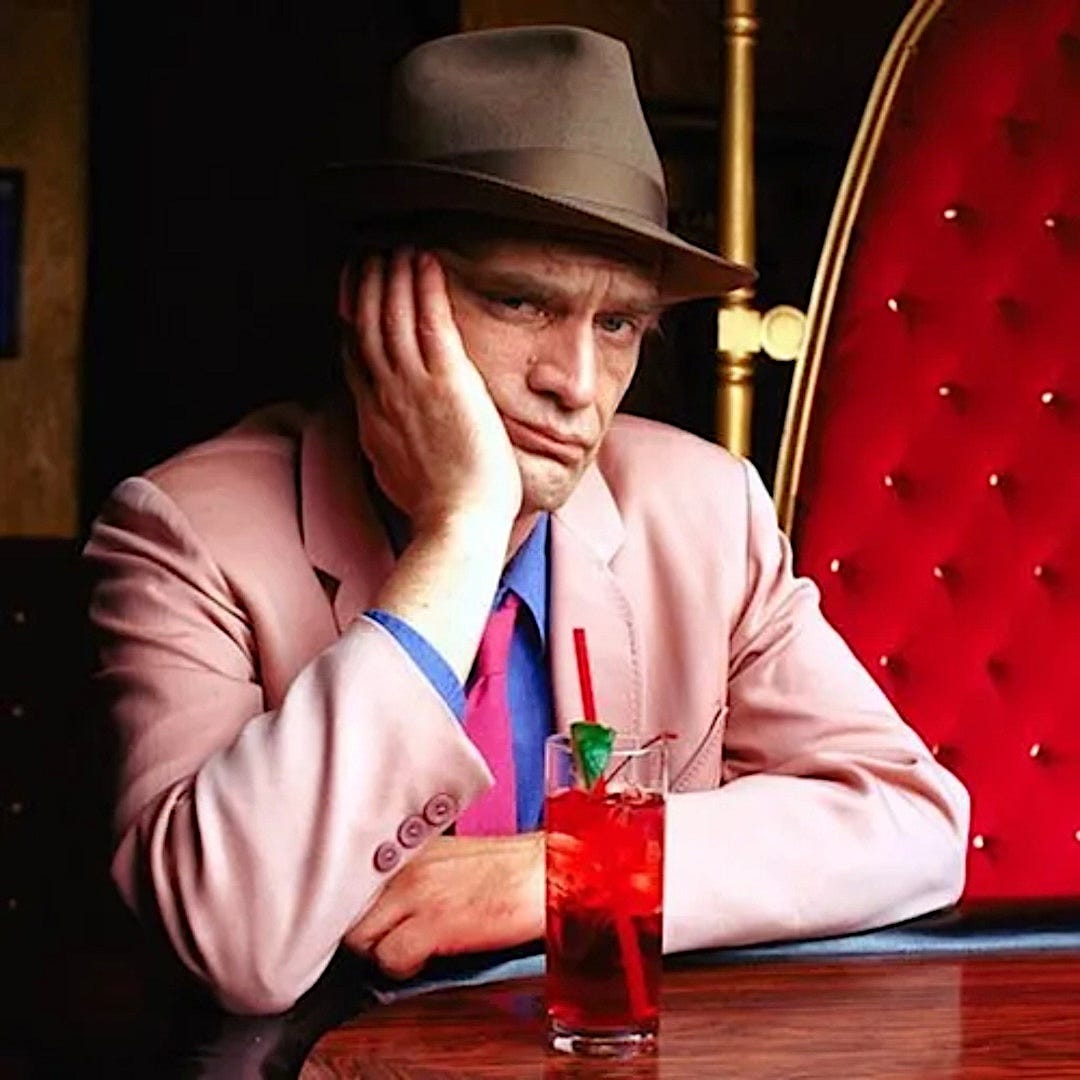
Ian Shoales photo by Dan Dion.
In your new book you mention Walter Benjamin.
Oh yeah!
About him trying to make a buck, and how he would pivot to doing something else for a living.
Oh, yeah. His whole life was a pivot. He was really, really smart. I don’t have the details correctly, but his PhD thesis was on some really obscure piece of Bavarian history that nobody would be interested in. He threw that out there, and everyone’s going, what is this? And so he never got his PhD. He was always trying to catch up. He was always teaching, and his wife and kids were like, please, Walter, come home. No. I must go to see what’s happening in wherever, and he just traveled all over and picked up gigs where he could. He wound up being a radio guy, actually.
Walter Benjamin?
I got a bunch of his radio shows, and the scripts are collected. One of them was a kids show talking to children: “Children, today I’m going to talk to you about the ‘Schwarzwald—and its implications.’” But he also wrote magazine articles. He was a freelance guy. And he kept running out of money, you know.
I read that and I was like, oh my god. He’s sort of the patron saint of all of us freelancers, in a way. You have to pivot. You need to be nimble. Like, okay. There’s no more money coming from this. I need to wander over here and do this instead.
Ultimately, I think what he wanted to be was the focus of the twentieth century. He wanted to embody the twentieth century, which he did in a way, ironically. He’s really smart. The things he said about popular culture and how fragmented things became, and how novels are dead. And he’s a champion of Kafka and Bertolt Brecht. He’s very readable. I first read him in an essay. He didn’t ever have a big major book.
But everybody knows who he is.
Yeah. He wrote magazine articles, basically.
That’s back in the days when a magazine would have 50 million subscribers.
Yeah. Or five, but they were all the world leaders.
Your current gig is the “Sixty-Second Philosopher” for the Philosophy Talk syndicated radio program. How did that start?
Well, that came out through [producer] Ben Manilla, because he knew me through radio. He needed a radio guy.
Through radio. Because there was a time when you were in Image Magazine, salon.com, Chronicle, Examiner, California, New West. All of these media entities were running Ian Shoales columns at one time or another.
Salon dropped me like a bad habit.
Oh, me too.
I still didn’t ever quite understand what the story was there.
I think they just ran out of money?
Yeah. Probably. Didn’t take long, did it? That’s the Internet!
So when you’re doing your Philosophy Talk bits, is there a different approach you have, as opposed to when you wrote Ian Shoales in the eighties? Or or is it essentially the same?
Well, it’s different in that I can’t pretend I don’t know anything. I have to do some research. Some of these people, I have no idea who this person is.
So you base your pieces on the theme of each program?
Yes. All Ian Shoales bits are cut to come off whatever the the topic of the week is.
And how long do you learn that in advance?
Oh, months.
Right. I think the episode I was on was about nihilism. You got me that gig, actually.
Oh, right.
And thanks again. I was interviewed for a very, very serious conversation about punk rock and nihilism. At the Marsh theater.
Oh, this is the Roving Philosophical Report.
Is that what it was? Because I remember the Philosophy Talk philosopher hosts. They were cool. And they were arguing backstage before the event even began. They were already into it.
Love that kind of stuff. Actually, I didn’t like Ken [Taylor] very much, but I admired him. He seemed like he liked to pick fights, if you know what I mean.
It was just hilarious to see. Most people backstage are trying to remember what they’re going to do, or they’re eating, or something. And these two guys are sitting in chairs and pointing at each other, and saying, “No. What you think you’re saying is that you think you agree in principle, but what you’re not saying is…” It was perfect. So anyway, you mentioned that you get the topics months in advance, and that gives you time to prepare.
But some of these are like, fuck. What am I gonna say about this? Especially if it was somebody kinda sad, in my opinion. We did profiles of women philosophers. A lot of them I’d never heard of. So it sounded kinda cool. But I didn’t know anything about them. I had to look them up, especially the one who’s from Korea. How the fuck am I gonna find out about this?
I actually found some pieces that she’d written, but they’re repressed because she lived in the 18th century. And this was one of the longest Ian shows I ever wrote, because I had to explain, okay, she was in this Confucian era. And she used Confucian principles to make sure that women could be represented in Confucian thought. And she wrote these pieces, but she couldn’t get them published because women couldn’t do that.
I had to explain Confucianism, how it intersected in Korea, how her family were all Confucianist scholars. Her husband died, and her brother died, but she observed all this stuff. She was really smart. So she wrote all this stuff anyway, and showed it to her family. And after she died, a hundred years later, it became this thing.
So people are now reading her.
Yeah. Some of these things that she wrote are just now being translated.
But it takes digging.
Digging, and it’s also like, yeah, you have to explain this before you can go anywhere.
Right. It’s a lot more research than writing, “I heart my dog head.”
Yeah exactly!
Those Philosophy Talk pieces are a different type of Ian Shoales. More mature, but still spewing 100mph.
It’s kinda like doing a Cliff Notes of the thing. That’s the thing I look for. Like, oh, he takes five paragraphs to say this. I could probably say this in a sentence. You’ll lose something. But you’ll get the gist. So that becomes the challenge.
But it’s cool that this character who originally commented on pop culture is now featured on this heady radio show.
Giving opinions on philosophers. And I have no right to.
[laughter]
I’m amazed nobody’s ever complained about it. People seem to just say, “Oh, yeah. You know what you’re talking about.”
What Jack Boulware Fails to Realize is a reader-supported publication. To receive new posts and support my work, consider becoming a free or paid subscriber.