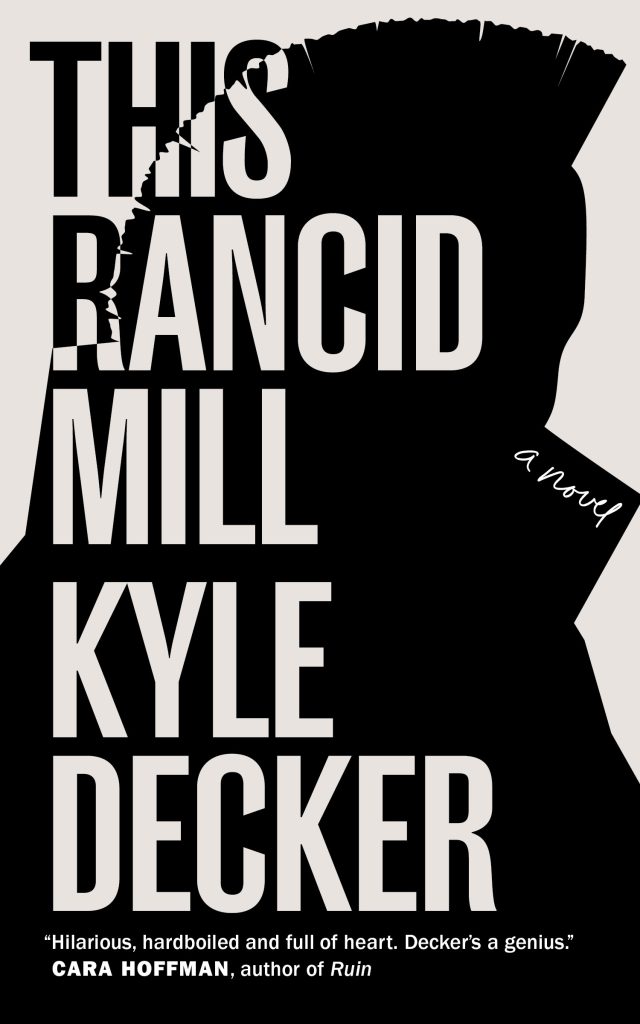
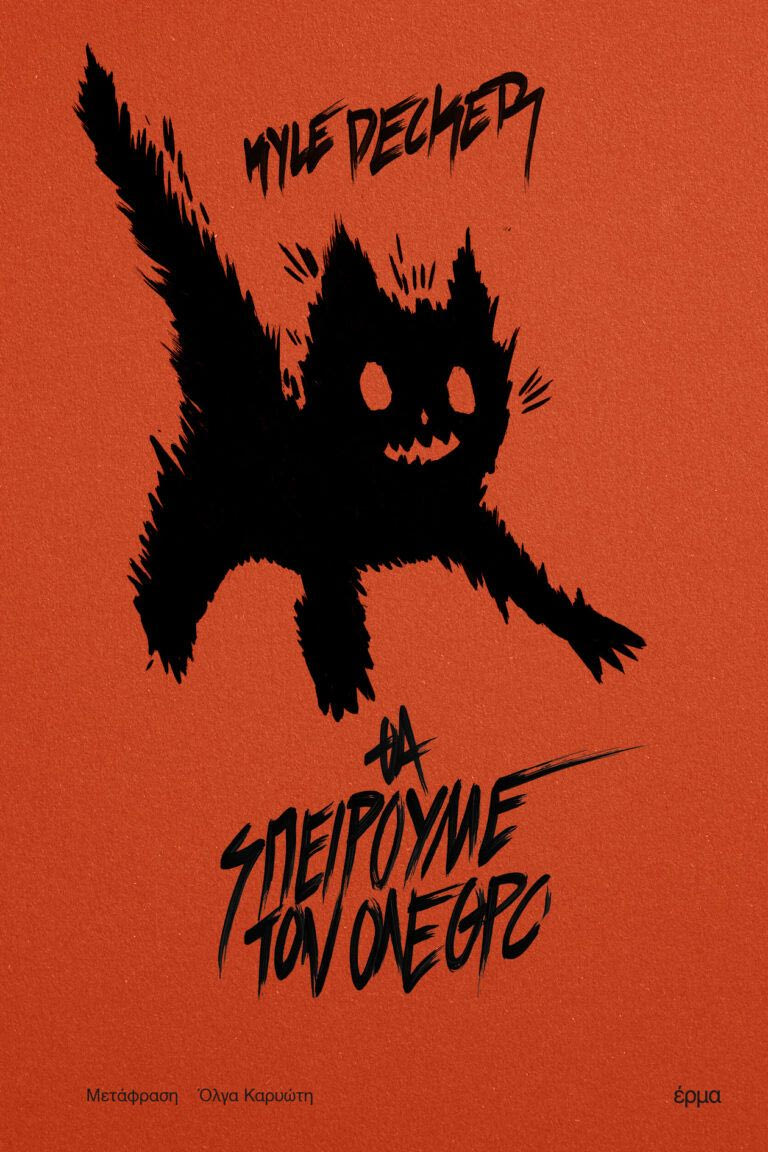
Singer of The Head Caution and teacher in immigrant schools, the American author by explaining how and why he’s his first punk noir novel, “We Will Sow Devastation,” which is just being released by Erma Publications.
“Old punks never die. It’s just that at concerts we stand at the back of the room. Besides, the sound is better near the console.”
By DIMITRIS ANASTASOPOULOS
News247
July 18th, 2026
Kyle Decker, a veteran of the punk scene, has not renounced its values. His novel is an adventure steeped in black humor where a twenty-year-old punk, Alex Damage, who makes a living as a private detective, investigates the death of a punk singer in 1981 Los Angeles. And he findsed by confronting gangs, skinheads, greedy drug dealers and politicians.
In a satisfying interview for NEWS 24/7, he explains how combined the momentum of punk with noir mystery.
How did you start writing?
I’ve always loved telling stories. Even before I learned to write, I would make up stories and record them on a cassette recorder I had.
But what really got me into writing was being on the speech team in high school. I was in the original comedy category. I had to write and perform an eight-minute skit on my own.
The judges always give birth my originality, but there was almost always someone who took ways away from me because they think I was stiff on stage and my humor was a drier. Whereas the winners in that class had a more explosive, more outlandish stage presence. So I thought I’m more of a writer than a performer.
So I enrolled in a creative writing class where my teacher was Bram Stoker Award-winning author Mort Castle. He was incredibly supportive and we remain in touch to this day.
And how did noir come about?
I owe my interest in crime fiction to my father. He’s a big cinephile and wanted to introduce me to classic films. He also showed me films that I probably shouldn’t have seen at my age. For example, when Pulp Fiction came out on video, he rented it and we watched it together. I was only ten years old.
At the same time, he me me shows many classic noirs like The Maltese Falcon and Double Indemnity, as well as neo-noirs from the New Hollywood season like Chinatown. It was the first story I remember where the good guy loses. It completely changed the way I perceived the narrative possibilities of profound and profound and influenced the way I see the world.
Then I studied creative writing at Drake University. One year there was an course dedicated to film noir and hardboiled literature. That’s where I really got hooked on that genre.
Why did you choose to set the story in the punk scene in Los Angeles during the Reagan era? What fascinates you so much about that period? I’m concerned in particularly cultural shifts. The punk scene in Los Angeles in 1981 had started to become much more violent. In the mid-to-late 70s, there were a lot of art school students, women, LGBTQ+ people, and creative people in general.
I am involved in cultural changes. The 1930s punk scene of Los Angeles began to be very violent. In the middle and late 70’s blended many students of art schools, women, people of the LGBTQI+ community and creative general people.
But as the music has been more aggressive, bullies, surfers, and gangs—people who had had beaten up dunks—be appeargan to at concerts. They now used the concerts as an excuse for violence.
So the question arises: what is he happens in a scene when it is no longer safe for the very people who created it? This is a question that every concerns counterculture. So I wanted to write the story of a man who is confronted with this very moment where he is realize what is happening.
How did a hero like Alex Damage, a punk private detective, come about?
I grew up in suburbs of Chicago and when I was in high school a punk band, Alkaline Trio, was extremely popular. They have a song called Private Eye. That’s where the idea of a punk private detective first came to my mind. It was in 2001 but it seems like the idea star with me for many years and maturing.
You capture the energy of the city and the people of that era in a striking way, police officers, right-wing gangs, criminals, politicians, porn stars and punks. How did you do you do your research?
Thank you. It’s really great to hear that. When you’re writing historical fiction about a time that many people still remember, there’s always a fear of making mistakes.
I read everything I could find. Every memoir, every oral testimony, every biography. I watched every available documentary on streaming platforms and even found some that’t available. I saw also fiction films, like Suburbia (1983) and Repo Man (1984). I found even a scrapbook dedicated to the punk fanzine We Got Power.
As I was writing, I kept a search tab open and cross-checked every detail. When each song released was, when each club was open, and which bands were active. You don’t want to write a scene where a band that formed in 1983 plays a club that closed in 1979, while the story take place in 1981.
I was interviewed by Daniel “Shredder” Weizmann, who wrote for Flipside magazine as a teenager in Los Angeles in 1981. He told me that the depiction of the era was remarkably accurate. Hearing that comment from someone who actually lived through that time and place was perhaps the greatest validation I could have received.
Critics compare your writing to that of Charles Bukowski or Thomas Pynchon. What are your main literary influences as a crime writer?
It’s interesting because of the song Private Eye by Alkaline Trio was inspired by Charles Bukowski’s novel Pulp. It’s last book and, in essence, it’s a crime novel.
Thomas Pynchon has also written that move in the field of detective fiction.
But if we’re talking about the classics, then my big influences are Raymond Chandler, Dashiell Hammett, Mickey Spillane, and Ross Macdonald.
I would also mention comic book creator Warren Ellis. He has a written novel called Crooked Little Vein, which is his own take on the detective story, in the exaggerated and style that characterizes his writing.
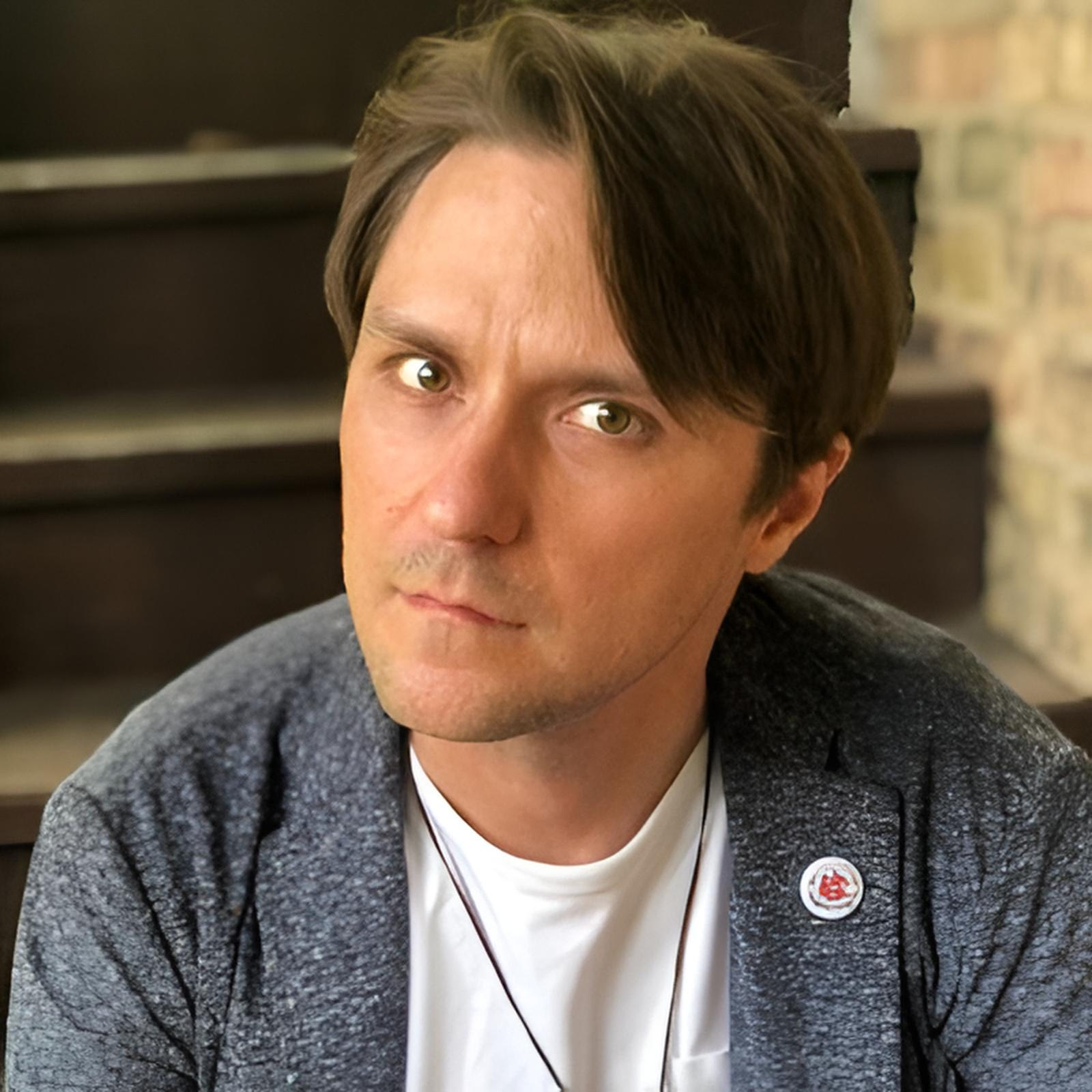
You are a writer, but you are also the singer of the Head Caution. What punk mean to you today?
I would say I am more of the “narrator” of The Head Caution to their singer. The band is based entirely on recitation. A friend called us “post punk beat poetry” and I think that is the most apt description.
I have,, justhyg on a five-track EP as Bad Chemicals, the fictional band featured in the book. Anyone who wants to hear what their songs might sound like can look it up.
Today, for me, punk goes beyond a specific sound, a style, or even an attitude. I’m not interested in short who is punk enough and arm who’s’t.
For me, it’s about values. It’s about the Do It Yourself mentality and the you would to support the community around you. It is to create what you want to exist and score it out there if you don’t feel. If you wait for the moment when you’re completely ready, that moment will probably never come.
If you let others do things for you, you’re actually letting them define your life. So do it yourself.
Your band can’t find gigs? Organize one yourself. Bars have stages. Libraries have rooms. No one is writing the books you’d like to read? No publisher is interested? Start a fanzine.
Punk is also about supporting those who are doing the same. Almost every Head Caution show ends with someone saying “That was amazing!” and suggesting the next show. We do the same for other bands, because there’s nothing more beautiful than helping someone keep going.
So what is punk? It’s about building a community around creating what you want in the world and supporting each other. No one is going to come and save us. We only have each other. So let’s help each other.
In an earlier interview you said that “punk has always been noir.” What exactly do you mean?
They were both share a cynicism. Thematically, both noir and punk revolve around the idea that society has been corrupted by people in power. The corruption is so deep-rooted and fouls so high up the that hierarchy we can hardly hope to promote it. But we can cause disruption.
The message I took from punk is the same as the one I took from noir. Just because you’re on the losing side doesn’t mean you’re on the wrong side.
And the lost cases are the ones most worth fighting for.
would you like the reader to take away from your book?
Much of the book was by consecrating the height of the #MeToo movement. Two key messages from that period run through the novel.
The first is that we need to be mindful of our own behavior and strive to become better people. The second is about the danger of placing people on pedestals.
At that time, it was revealed that artists and public figures we admired were capable of truly horrific acts. We didn’t just feel betrayed. Many even feared what it meant for themselves to love the work of these people. Others dismissed the allegations altogether, trying to convince themselves that the creator of their favorite song could not possibly have done such a thing.
This is a delusion.
At the end of the day, we have to be our own heroes. We shouldn’t idealize others to such an extent. Personally, I don’t like the idea of erecting statues, figuratively or literally.
Alex grapples with both of these ideas throughout the book. While investigating the murder of his favorite singer, he discovers very dark sides of a man he knew and admired.
The truth is only when revealed he takes of the rose-colored glasses through which he saw the world. And this is so many people the victim Jerry Rash and himself.
In your novel, you write about Ronald Reagan’s America. What is your take on Donald Trump’s return to the presidency? I could write an book that completely would put me on watch lists. I hated Trump long before he-in-heated politics. He embodies the worst of American society. He is a fraud. His decisions and policies seem to be driven exclusively by his own financial self-interest.
I could write a whole book that would probably put me on watch lists. I hated Trump long before he got into politics. It expresses the worst thing in American society. He’s a crook. His decisions and attitudes to be guided solely by his personal economic interest.
In the first year of his new term alone, he was increased his personal fortune by $2.2 billion, through cryptocurrencies and meme coins.
I think no politician should be allowed to trade stocks, because it is a clear conflict of interest. But the way Trump and his family have been using their power is particularly provocative to me.
At the same time, he started a war with Iran and continues to talk about annexing Greenland, a territory by party to an ally of the United States.
But what touches me the most is immigration policy.
My wife is immigrant an. She is in the United Lawyers. Yet from her appearance and the way she speakers, you can don tell she’t born here, and unfortunately, that’s enough to make her feel vulnerable.
That’s why I need to be extremely sound even when I participate in protests. I’m afraid every day.
We live near one of Chicago’s most multicultural and multilingual neighborhoods. For this reason, our area is often the target of Immigration and Customs Enforcement (ICE) and Border Patrol (CBP) operations.
Last October, the Border Patrol used tear gas in our neighborhood, literally a few blocks from my house.
They accrued a gardening worker as the children’s carnival parade was about to begin. When residents demanded an explanation from the agents, they responded with tear gas.
My day job is teaching English in a high school. I certified in teaching English as a second language and during the 2024-2025 school year I I students taught who did not speak English well.
Most of my students that year were refugees from Venezuela. My lessons included phrases like, “Repeat: without a warrant, you do not enter the house.” I also explained to them, in the simple Spanish I I call, the difference between a valid and an invalid search warrant. The song Immigrants by Head Caution was born out of this experience.
The scariest thing about this whole situation is that about a third of Americans still support. And it’s not because they think he doesn’t want to be dictator a. They believe that a is a dictatorship what the country needs right now.
This Causes This is the Second term Much More Dangerous than the First. This time there are no people around him to act as a counterweight. He has been surrounded by people who show himself completely submission and are not going to limit him.
In times like these, all we can do is hold the people we love close to us and help our neighbors in any way we can.