Remembering those who came before us and continuing their work as we mark Women’s Month 70 years since the 1956 march is a national duty for those who enjoy the fruits of our democracy
By Shanthini Naidoo
Sunday Times
August 2nd, 2026
Remembering those who came before us and continuing their work as we mark Women’s Month 70 years since the 1956 march is a national duty for those who enjoy the fruits of our democracy
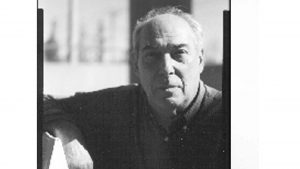
The image that will remain with those of us who gathered to bid farewell to Shanthie Naidoo is this: a tiny face resting on white satin, her fine grey hair covered with pale pink roses, placed there by mourners in accordance with Hindu custom. She looked gentle and serene. Nothing in that final image revealed the woman who had spent her life in struggle: the communist, the underground activist, the disciplined cadre who refused to bend before apartheid.
There are thousands of foot soldiers, grandparents and great-grandparents, who should be remembered, but some stand out because of the bravery of their acts.
One of these is the diminutive Shanthivothie (Shanthie) Naidoo-Tweedie, who died at 91 on Thursday July 23. Peaceful in name and in manner, unwavering in conviction. Her death, ironically, throws the spotlight on her life days before the country transforms into pink floral messaging for women’s month. But we must look beyond sentiment and celebration to the true meaning of the long weekend, to what it is based on.
This tribute is not meant to depress us while we brunch at our Midrand watering holes, or to elicit tiresome sighs about the repetitive revisiting of our bloody history, or to not celebrate the wins in equality that do exist. It is meant to be a reminder to do as our constitution states… to honour those who came before us. To do the right thing.
This happens to also be the last voter registration weekend ahead of the November elections.
The clear message at Shanthie Naidoo’s funeral and in commemorating her was that we all — in whatever capacity — continue using our voices and the right to vote that the majority of South Africans have only because of a long, hard struggle. Veteran struggle heroes Ilva Mackay, Snuki Zikalala and Mac Maharaj reminded us that the post-struggle generation must, despite the challenges, accept and carry the baton of responsibility handed to them.
So, it was not a tearful goodbye to Naidoo but a celebration of a life of unwavering virtue and a reminder to those who will receive the lessons.
Today we dip our revolutionary banner in honour of comrade Shanthie. Each one of us had the responsibility to become actively involved
— Snuki Zikalala
Zikalala, too, reminded the youth of the job to be done: “Today we dip our revolutionary banner in honour of comrade Shanthie. Each one of us had the responsibility to become actively involved… to confront the challenges we are faced with today.”
The pair had worked together in the underground ANC and were swept up in the same wave of repression in 1969. The bond forged through detention, interrogation and an unwavering refusal to betray their comrades endured throughout their lives. It was a friendship rooted not simply in politics, but in shared sacrifice.
They were among 22 activists imprisoned during a nationwide Security Branch crackdown. Together with Winnie Mandela, Joyce Sikhakhane, unionists Rita Ndzanga, Benjamin Ramotse, Samson Ndou and others, they were accused of rebuilding the underground ANC and detained without charge.
Over a year later, they were taken to trial, where they exposed the brutality of the apartheid security apparatus. Before justice Simon Bekker, Naidoo and her co-accused described prolonged solitary confinement, assaults, intimidation and torture. Solitary confinement was particularly harsh on women, deprived of basic food, water, exercise, human contact and sanitary material. The courtroom became one of the first places where the methods of the Security Branch were publicly laid bare. Naidoo recalled how she was made to stand for five consecutive days. During this ordeal she lost touch with reality, and began to hallucinate. The Security Police harassed her about the hallucinations, too.
As the evidence accumulated, the state’s case began to collapse, and Bekker reminded her that her freedom could be bought with testimony against the other accused. She refused. She said: “I have two friends among the accused. I don’t want to give evidence because I will not be able to live with my conscience if I do.” Winnie Mandela recalled the petite Naidoo in her “pale yellow dress, her skinny arms” visible, and her soft voice saying the brave words that prevented their prosecution — itself an act that likely changed the course of history.
After 371 days in solitary confinement, Naidoo was released and her banning order was immediately renewed. Appeal after appeal saw her finally receive her exit permit to join her sister in London after two years. In one instance, the exit permit was in place, but her banning order prevented her from travelling to the airport in Johannesburg. When she was finally allowed to leave, more than 200 people arrived at the airport to bid her farewell — and she had to say good-bye to one person at a time, again in line with her banning order.
In the UK, she worked for the Soviet Weekly publication and for the International Defence & Aid Fund.
In 1980, Naidoo and her fiancé, Dominic Tweedie, a British anti-apartheid activist, were part of the building of the ANC school at Mazimbu, Morogoro, in Tanzania. They married there and, in 1991, returned to South Africa, where union work continued. In retirement, they lived a quiet life in the eastern suburbs of Johannesburg, tending the same garden where her funeral was held.
Tweedie reminded us that Naidoo never regarded herself as extraordinary. She believed she had simply done what history demanded of her generation.
Naidoo was one of five children of Manonmoney (Ama) and Thambi Naidoo, themselves key figures in the resistance movement, as were their parents, going back to the days of Paul Kruger and Gandhi. Her siblings, too, were activists: Indres, who was jailed on Robben Island, Murthi, Prema and Ramnie. Her contribution started at a young age, “organising” as they called it — arranging school boycotts, distributing banned reading material and attending mass meetings at the Red Square in Fordsburg (now the Oriental Plaza). Memorials and eulogies were sent from the myriad liberation organisations to which she contributed — the Federation of South African Women, the South African Congress of Trade Unions and others.
What stays with me is that she, and the women in the trial of 22, endured what few human beings could endure and emerged without hatred. She remained committed to justice, to equality and to the belief that ordinary people, acting together, could build a better society.
Her life and death remind us that the greatest tribute we can pay to those many foot soldiers who came before us is not only to remember their courage but to protect the democracy for which they sacrificed so much without complaint. We have a responsibility to defend our constitution, to participate in our democracy, to vote, to create impact where we can and to encourage younger generations to take up the unfinished work of building a more just and equal South Africa — to do the right thing.
• Shanthini Naidoo is author of “Women in Solitary: Inside the female resistance to apartheid”, which documented the Trial of 22 in 1969-1970