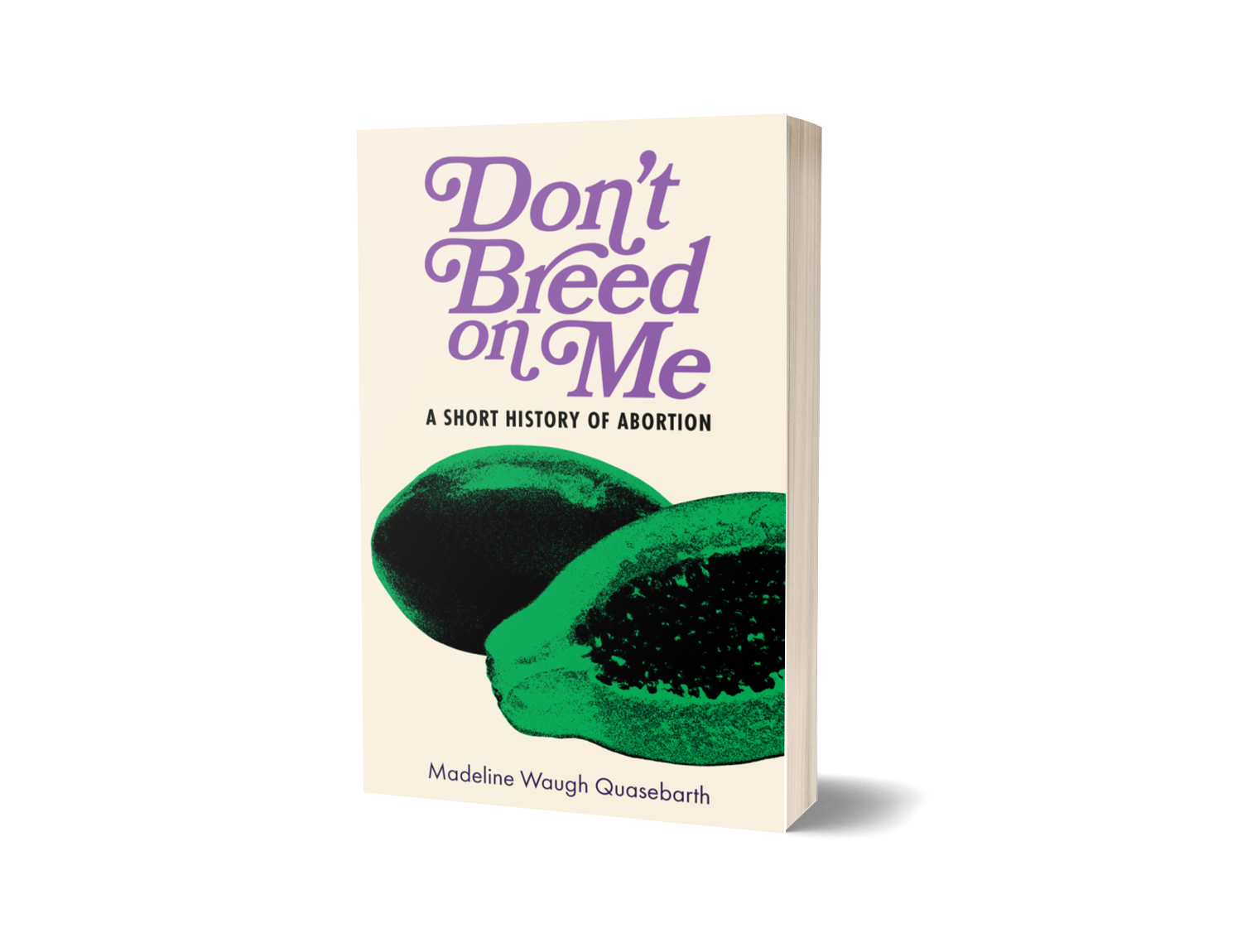
In this illuminating and feisty debut history, public health scholar Quasebarth seeks to “resurrect a nuanced understanding of abortion” as an “integral aspect of our shared human experience.” Drawing on records dating back to the ancient world, she highlights how periods in which abortions were stigmatized have been balanced or even outweighed by periods in which they were seen as unremarkable and commonplace. Proofs of the latter range from the Ebers Papyrus—one of the oldest surviving Egyptian texts, it contains “a plethora of… concoctions” to induce abortion and prevent contraception—to St. Hildegard von Bingen’s 12th-century herbal recipes for abortions and traditional Aztec medical practices documented by the Spanish. Abortion has even occasionally had a more positive spiritual association, like in Tokugawa-era Japan, where practitioners ceremonially “returned the fetus back to the gods.” Quasebarth concludes that abortion rates typically rise as a means of fighting back against excessive political or social control—she cites as an example evidence of high rates of abortion among enslaved African Americans—and that abortion “is only coupled with religious ideologies when [it’s] economically advantageous” for the powerful to force more births. Written with amusing bite—“we have fucked, sucked, and ridden the dragon of St. George for the past two million years”—this is worth picking up for avid readers of feminist history. (June)