By Priscilla Imboden
Republik
July 16th, 2026
FDP National Councillor Simon Michel is involved with prominent Silicon Valley investors in the private city of Próspera in the Caribbean. Democracy should be overcome.
Próspera – that’s the name of the dream of the US tech bros. There they create a private city-state according to their imagination: no regulation, minimal taxes, limitless entrepreneurial freedom. And not democracy. The project is on an island in the Caribbean off the coast of Honduras.
In Próspera, what is otherwise forbidden should be possible. For example, an American start-up entrepreneur has undergone a gene therapy that is not approved by any health authority. Men of younger and middle-aged computer chips can be implanted. The tech bros are working on new start-up projects and trade with cryptocurrencies without any regulation, as an SRF report shows.
Powerful men from Silicon Valley have invested in the construction of the private city: Peter Thiel, for example, the founder of the surveillance company Palantir and the online payment service Paypal, venture capitalist Marc Andreessen, Brian Armstrong, the founder of the crypto trading platform Coinbase or Patri Friedman, the great-grandson of Nobel Prize winner Milton Friedman.
Until now, it was not known that among the investors there is also a prominent Swiss politician and entrepreneur: FDP national councillor Simon Michel. He is one of the first investors in Próspera, he confirms on request corresponding information of the Republic. According to his own information, Simon Michel has invested around one million dollars in the project. He heads the medical technology group Ypsomed, which was founded by his father. The assets of the Michel family are estimated at around 5 billion Swiss francs.
Simon Michel explains his commitment to the libertarian city-state in an interview with the Republic by saying that he has been moving in the libertarian scene for 15 years. But after it drifted to the right, he was less active.
The idea of a minimal state, however, still fascinates him. A libertarian state cannot be put over an existing democracy like Switzerland, says Michel. But rebuilding such a state, as a state-political experiment, that is rather possible. There are many similar projects in the world, he knows them all. But Próspera is the most advanced.
Próspera was founded in 2017 and is located in a so-called special economic zone on the Honduran island of Roatán. The modalities of the private city are contractually regulated with Honduras. Simon Michel explains that Próspera can build its own courts and a police force, as well as create sovereign state institutions – with the exception of the military and energy supply. The private city counts almost 1000 immigrants and 12’000 virtual citizens, so-called e-residents. Michel emphasizes, however, that he is neither one nor the other, but a silent investor.
The spiritual father of Próspera is the German Titus Gebel, entrepreneur and author of the book «Free Private Cities» (to which Simon Michel also refers in conversation with the Republic). Gebel has also written the rules of Próspera. The private city is operated by the US company Honduras Próspera Inc., which in turn is financed by the company Pronomous Capital. It belongs to the aforementioned libertarian activist Patri Friedman, who is connected to Peter Thiel through other similar projects, for example via Seasteading, an institute that wants to promote private states floating in the sea. Thiel, in turn, is perhaps the most influential tech billionaire. He represents a religious-apocalyptic, libertarian ideology. It ultimately boils down to the fact that rich people like himself have only rights and no obligations to society.
What men like Gebel, Thiel or Friedman have in common: they don’t think much of democracy.
Patri Friedman told the Financial Times: “We are setting up companies that do not run democratic cities. If you don’t like it, you shouldn’t move there.”
Peter Thiel wrote in an essay years ago: “I no longer believe that freedom and democracy are compatible.”
And Titus Gebel finally said in the podcast of the Swiss Liberal Institute: “Democracy is not compatible with a classic liberal minimum state.”
Alternative to Democracy
Titus Gebel founded the company Deutsche Rohstoff AG and thus made a fortune. Today, he lives in Monaco – and he argues that democracy is doomed because it is based on expropriating those who did something “under violence or the threat of violence” in favor of those who did nothing.
With the idea of the “free private cities” he wants to create an alternative to democracy. “That’s my hope,” he said in an interview with the Swiss Liberal Institute. On its website, Gebel continues the concept: private individuals and companies conclude a contract with a profit-oriented company that operates the cities, so that it guarantees the protection of life, freedom and property. The private individuals and the companies pay a fee for this. If they are not satisfied with the service of the company, they can sue against it or leave the private city.
Gebel criticizes this concept: «Participation in all these projects is voluntary. (…) What is the problem? There is none from my point of view.”
In the case of Próspera, this is how it looks like: The private city-state has a resident council with nine members, which governs the area. Four of these members are appointed by Honduras Próspera Inc. Four others are elected by the inhabitants, two of them by the landowners, whose voting rights are measured by the land ownership. The last member is elected by the Council itself.
“It’s a three-class right to vote like from 19. Century,” says Andreas Kemper, author and sociologist who has conducted research and published on the private city movement. He finds such projects disturbing. “You are a battle announcement to democracy,” he said. The argument that participation is voluntary does not apply. “The promoters of these private states want to expand them to as many places as possible, including Germany.” And if they built nuclear power plants in these non-regulation zones or released genetically modified living beings, this could cause damage that extends far beyond these private states.
The foundation of the private city of Próspera in Honduras was not without difficulties. The Central American country had introduced a law shortly after a military coup in 2009 that provided for special economic zones. Leader Juan Orlando Hernández promoted this project. In 2022, the left-wing politician Xiomara Castro was elected to the presidential office. The highest court banned the autonomous special zones but never clarified what that meant for the already existing zones. Próspera Inc. subsequently sued Honduras before an international arbitration tribunal for a damage amount of 11 billion dollars – equivalent to two-thirds of the state budget at the time. At the end of last year, the right-wing contractor Nasry Asfura won the presidential election. US President Donald Trump had supported him and threatened to cut US funds if he were not elected. The U.S. Department of State is now campaigning for Pr ó spera.
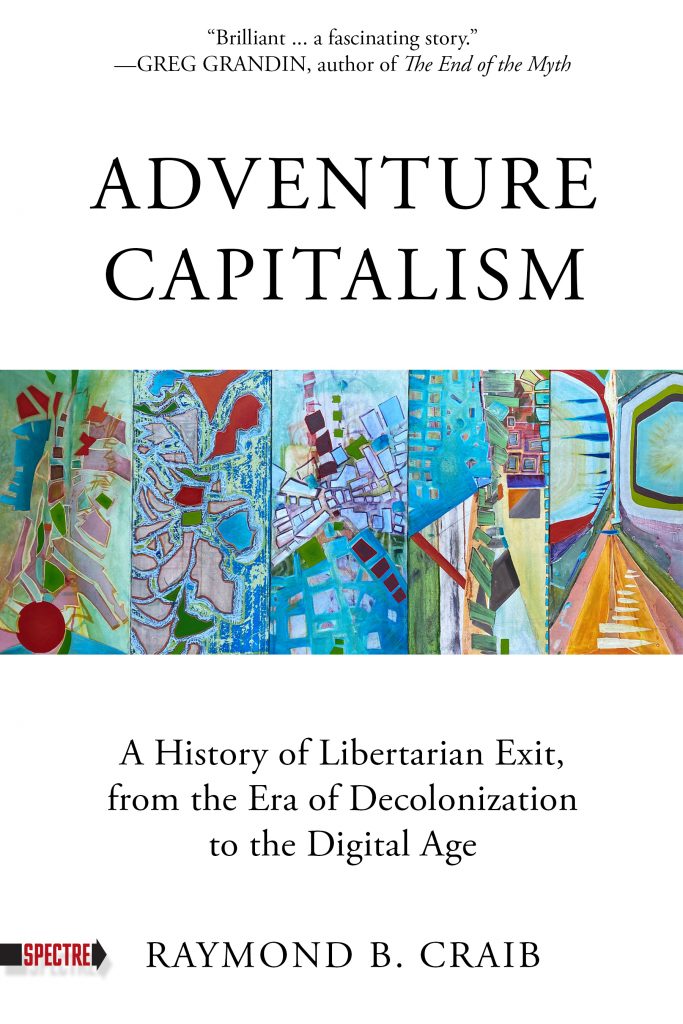
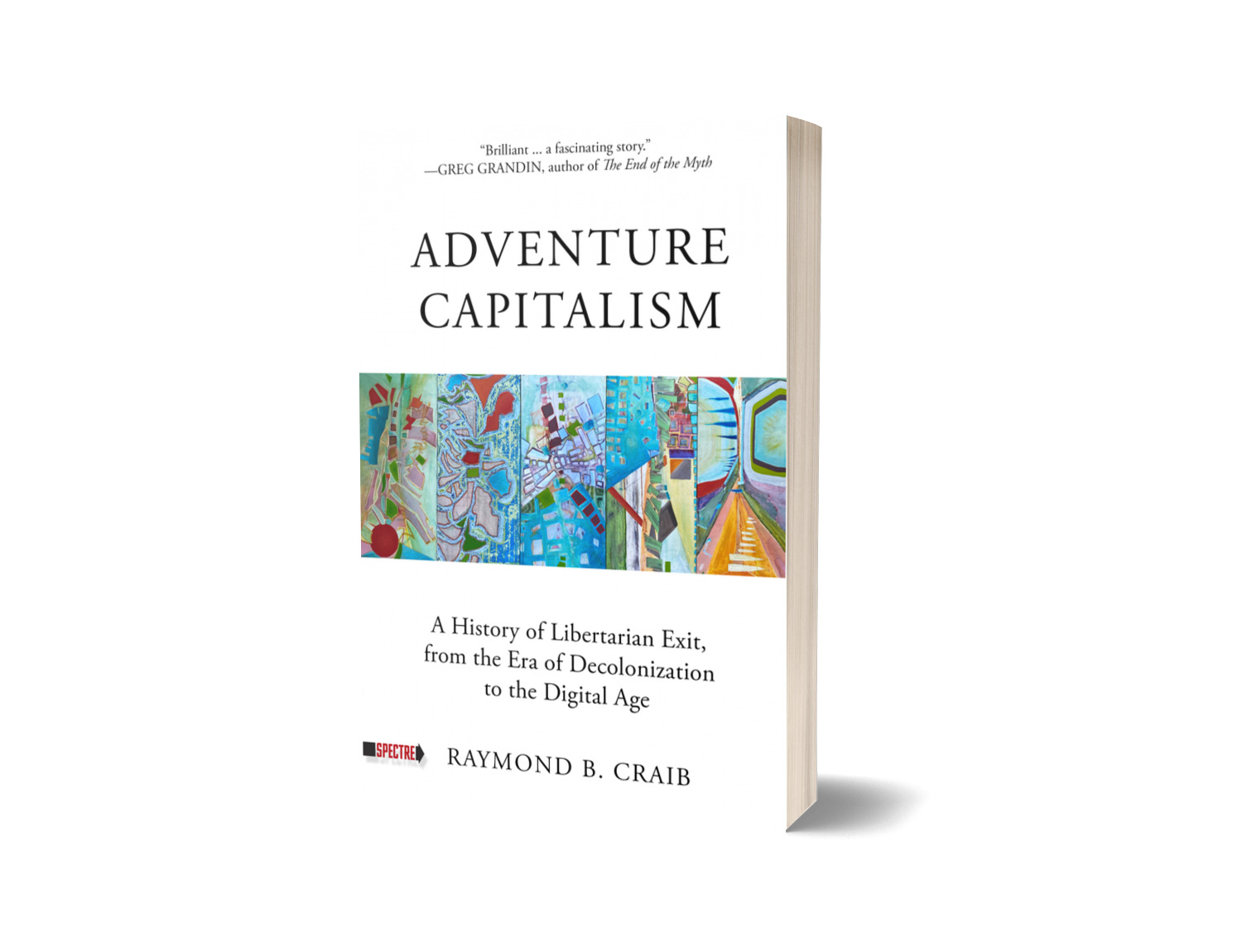
“For investors in Próspera, the last change of government in Honduras is a positive turnaround,” says Raymond Craib, a professor at the U.S. University of Cornell and author of Adventure Capitalism. In the book, he traces the history of libertarian state projects in recent decades. None have been successful so far, says Craib, and even with Próspera it is not certain whether it will succeed. But either way, the project develops political impact: “It combines people with unspeakable political and financial resources that dominate the technologies of the future, with a very own and worrying idea of how the state should be organized.”
The network reaches into Switzerland
Switzerland also plays a role in the network of these people. The Free Private Cities Foundation, in which Titus Gebel serves as Chairman of the Board of Directors, was domiciled for two years at a roof foundation in Zurich. The management consultant Marc-Felix Otto, who lives in Switzerland, sits on the board of the Free Cities Foundation. He will give a speech at the Foundation’s Free Cities Conference, which will be held in Próspera this September. The Swiss company Olivier Kessler serves as the “Senior Advisor” of the Foundation. He became known throughout Switzerland as one of the minds behind the “No Billag” initiative, which demanded the abolition of the SRG and remained without a chance at the polls. Kessler was formerly active in the SVP and wrote for the right-wing national “Swiss period”. Now he is director of the Liberal Institute, for which he interviewed Titus Gebel.
The second conference of the Free Private Cities Foundation took place in 2021 in the property of the packaging entrepreneur Daniel Model in the Thurgau, which operates in this building a kind of own Free State called Avalon.
That FDP National Councillor Simon Michel appears in this network is surprising. His political positions hardly suggest libertarian beliefs, except perhaps his support for the SRG-Halbierungs initiative. So he campaigned for subsidies for the steel industry, called for a higher corporate tax to finance the army and is fighting for the new bilateral treaties with the EU. These are all positions that would bring die-hard libertarians to shudder. Recently, he also denounced “two neoliberal-libertarian masters” on X, “who repeatedly speak out against our institutions.” The occasion was a document against the bilateral treaties that ex-banker Konrad Hummler and ex-Avenir Suisse director Gerhard Schwarz had sent to parliament.
It would be interesting to learn how Simon Michel explains all this – and what he thinks about the anti-democratic statements of exponents of the private city movement. After an initial conversation with the Republic, however, the FDP National Council no longer responded to corresponding questions, neither via mail nor by text messages. He also did not accept any more calls from the Republic, although he gave information about current events to other media at the same time.
So it remains the secret of Simon Michel, why he, as an FDP national councillor and as a businessman at the national level, pursues a state-supporting and fundamentally moderately free-speeding policy – but finances a libertarian and anti-democratic private city-state together with tech billionaires from Silicon Valley.